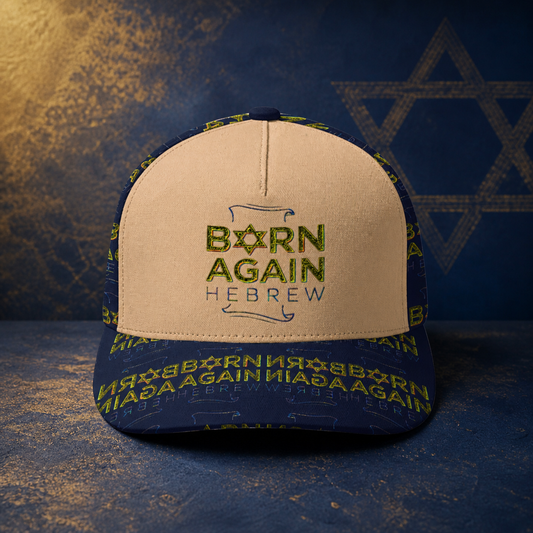
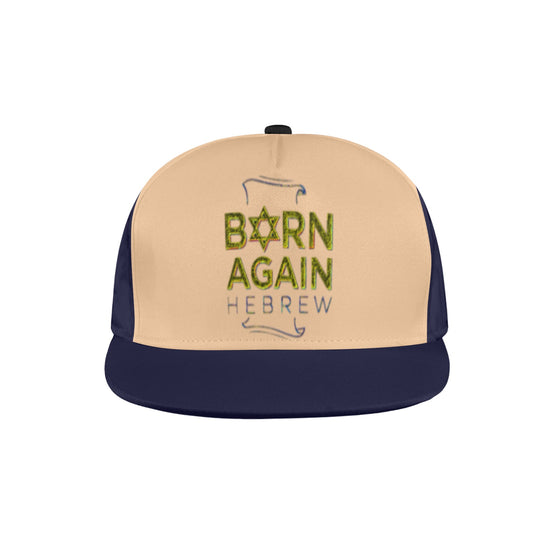
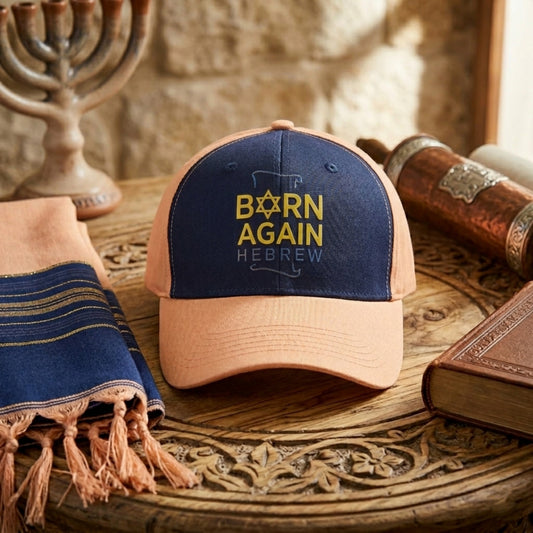
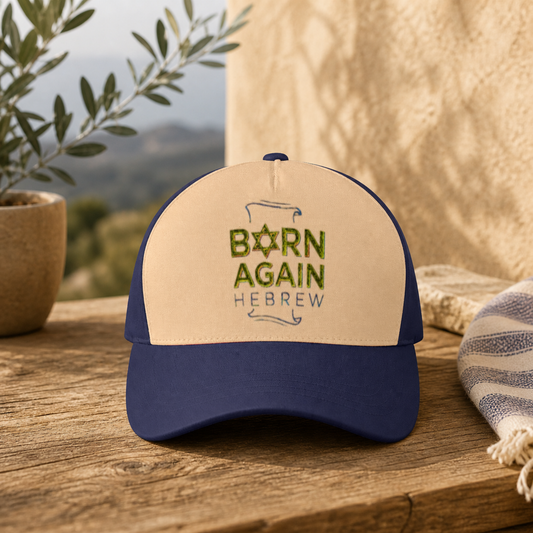
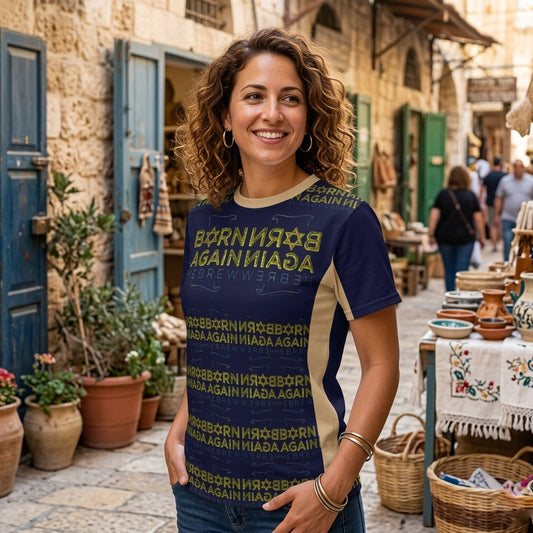
To interpret this design from a Hebrew perspective, we can look at the symbolism of the text, the iconography, and the historical/theological context of the phrasing.
1. The Central Icon: The Hexagram
The most prominent Hebrew symbol here is the Hexagram.
* Protection: Historically, the Hexagram, in relation to the idea Magen David (Shield of David) represents Yahuah (God) as the protector of King David.
* Unity: Philosophically, the two interlocking triangles are often interpreted as the connection between the Creator and Creation, or the harmony between the physical world and the spiritual realm.
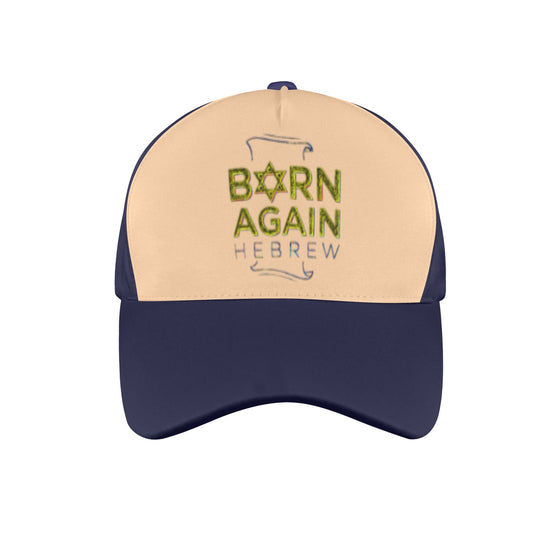
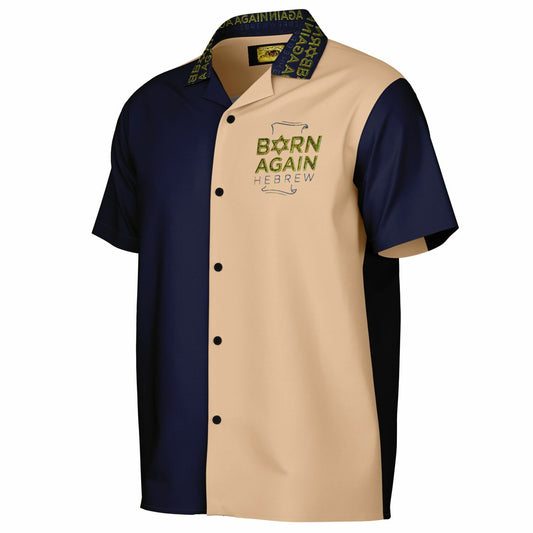
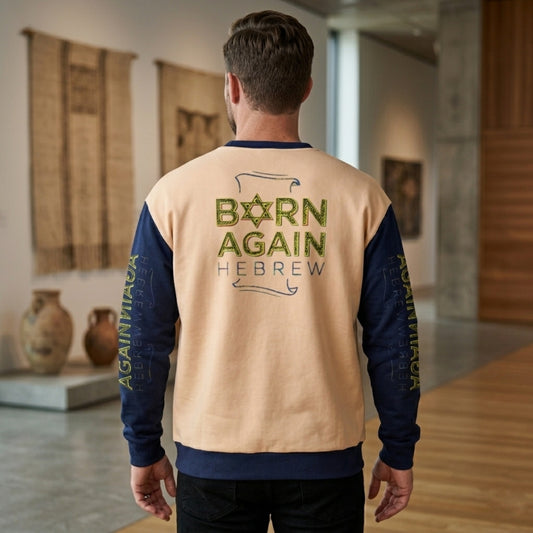
* Replacement of the "O": By placing the star where the "O" should be in "BORN," the design implies that this rebirth is centered specifically on a return to Hebrew roots.
2. The Textual Concept: "Born Again"
The phrase "Born Again" is traditionally associated with the concept of spiritual regeneration. However, from a Hebrew perspective, there are several parallels:
* Return: A "returning" to one's true self and to God whom is the Author of Truth.
* Conversion: a transition from one state of being to another, much like a rebirth.
3. "Hebrew"
The use of the word "Hebrew" evokes a more ancient, tribal, or linguistic connection.
* In a Hebrew context, the word for Hebrew is Ivri (עִבְרִי).
* The Root Meaning: The root ‘avar means "to cross over" or "to pass through." Historically, this refers to Abraham crossing the Euphrates River, but spiritually it signifies being "on the other side"—standing apart from the status quo or transitioning from one state of being to another.
4. Visual Elements
* The Scrolls: The decorative flourishes at the top and bottom resemble the ends of a Torah Scroll. This suggests that this "rebirth" is grounded in the study of sacred texts or the Law.
* Gold Texture: The yellow/gold "hammered" texture suggests something precious, refined by fire, and enduring—much like the golden vessels used in the ancient Temple in Jerusalem.
Summary of Meaning
From a Hebrew perspective, this design represents a profound spiritual awakening or a "return" to one's heritage. It merges a term often used for spiritual zeal ("Born Again") with the specific symbols of Hebrew identity, suggesting that the wearer has found a new life through their connection to Hebrew culture, faith, or ancestry.